Healthcare
Physician and Healthcare Headshots in Chicago
Healthcare is the largest body of work in this studio. Kay Choi photographs physicians, dentists, nurses, clinical pharmacists and aesthetic practitioners — on the ward, in the clinic, or in the Naperville studio — and she has practised as a hospital pharmacist herself for fifteen years.

Why a patient looks at your photograph first
Before a new patient meets you they have almost certainly seen your photograph — on a health system's find-a-doctor page, an insurer's directory, a practice website, or a search result. They spend a couple of seconds on it, and in those seconds they are answering a question that has nothing to do with your training: will this person listen to me?
That is a real clinical outcome, not a marketing one. Patients who arrive already trusting a clinician disclose more, comply more and cancel less. A photograph cannot manufacture that, but a bad one can undo it — the flat directory portrait taken against a beige wall in credentialing, the badge photo with the fluorescent tube overhead, the one cropped out of a conference group shot.
So a healthcare headshot has a narrow brief: competent and approachable at the same time, in a frame the size of a postage stamp, in a directory you do not control the design of.
Photographed where you actually work
Kay photographs on site — hospitals, clinics, dental practices, treatment suites, medical office buildings — and the logistics are handled before the day rather than negotiated in a corridor. Building access, visitor passes, facility guidelines, parking and load-in are all arranged in advance, and the session is scheduled around clinic hours rather than across them.
That matters because clinicians cannot leave a floor for two hours. A physician sitting is planned as a defined slot, often between clinics, and a whole department can be photographed in a rota so nobody is standing in a hallway waiting.
The studio in Naperville is the other option, and it is the right one when a practice wants every clinician on the same clean background regardless of which building they work in.
Clinicians
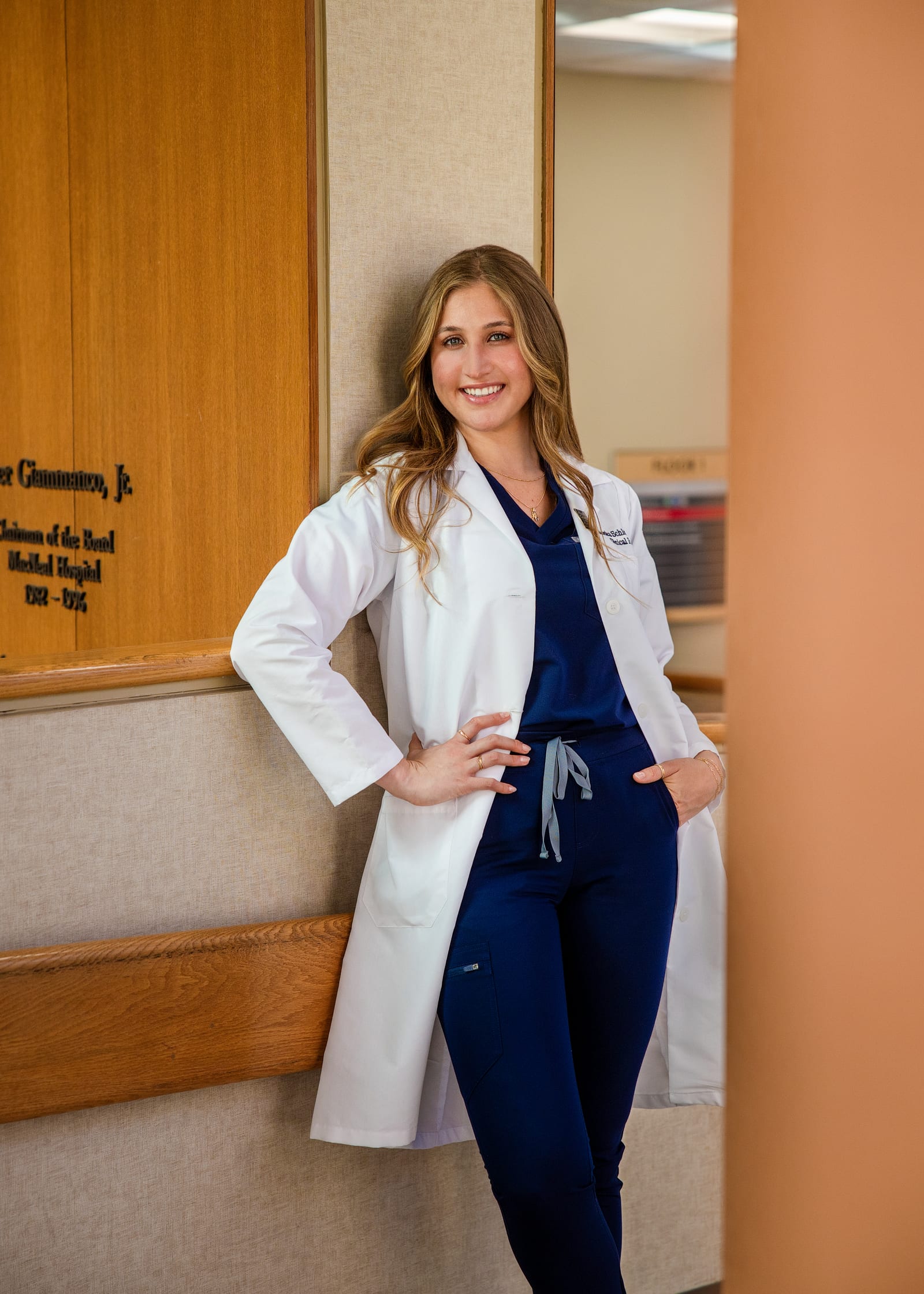
01Healthcare providers 
02Healthcare providers 
03Healthcare providers 
04Healthcare providers 
05Healthcare providers 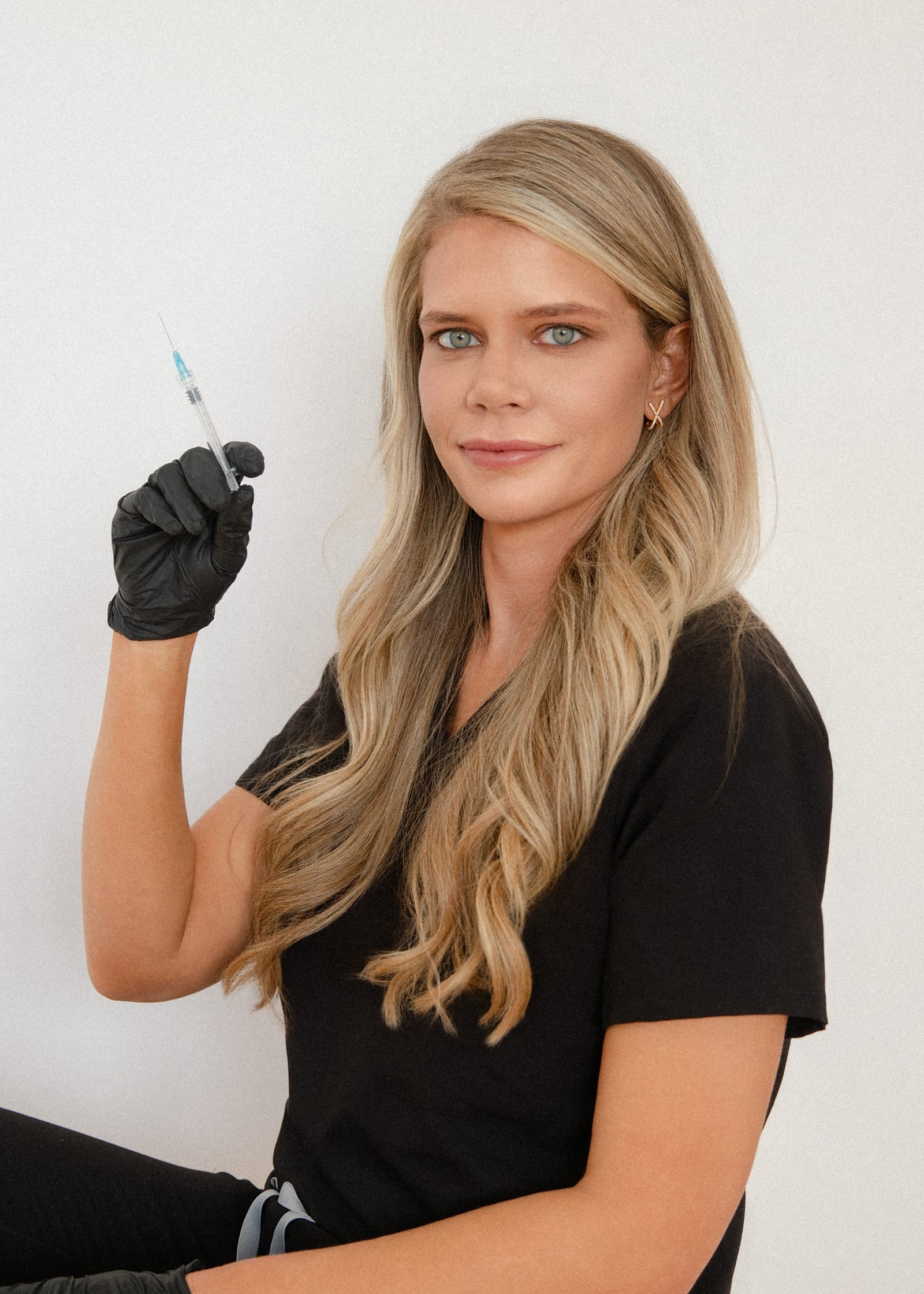
06Healthcare providers
What healthcare sessions account for
- White coats
- Fit, collar and lapel checked frame by frame — a coat that sits badly reads as borrowed
- Scrubs
- Colour and background chosen so the two do not merge or clash
- Badges and lanyards
- Straightened, or removed and reshot, so they do not become the subject
- Stethoscopes
- Placed deliberately if worn at all, never left hanging as a prop
- Setting
- Corridor, treatment room, clinic reception, or clean studio background
- Directory crops
- Framed so a square or circular directory crop does not remove your shoulders
Sessions run in the Naperville studio or on site at your hospital, clinic or practice. Team and department sessions are quoted on the size and needs of the project.
The photographer works in healthcare too
Kay has practised as a hospital pharmacist for fifteen years — she still does — and holds a Master's degree in Visual Communication Design. It is an unusual combination — healthcare, design and visual communication in one person — and in this vertical it shows up as things that do not have to be explained to her.
She knows what a floor looks like at eleven in the morning, why a clinician glances at the clock, what the difference is between a white coat that fits and one that has been in a locker since residency, and why photographing in a treatment room means being invisible about it. She also knows to keep patients, charts, screens and identifiable information out of frame without being told.
Sessions run in English or Korean. Kay speaks both, and for Korean-American physicians, pharmacists and practice owners across the western suburbs that means the planning conversation, the direction during the sitting and the review on screen can all happen in the language they think in — which is not something any other photographer in this radius offers.
More on that background is on the about page, and there is a fuller healthcare portfolio.
Questions from clinicians
Should I wear my white coat for a headshot?
Usually one set of frames with it and one without. The coat is instantly readable as clinical authority, which is exactly right for a hospital directory, and slightly formal for a practice website that is trying to feel approachable. Shooting both takes minutes and means you are not locked into one register for the next three years.
Can you photograph on a hospital floor?
Yes, and it is a large part of the work. Access, visitor passes and facility guidelines are arranged in advance, the equipment footprint is planned around the space, and nothing is photographed that would put a patient, a chart or a screen in frame.
Can our whole department be photographed in one visit?
Yes. Departments and practices are photographed on a rota through a single visit, with identical lighting and background so the directory page looks like one organisation. See corporate photography for how those days run.
What should I wear under a white coat?
A solid colour with a defined collar. Fine patterns and small checks shimmer on camera, and a very pale top can disappear into the coat entirely, leaving a floating head.
The full guide to what to wear for headshots covers scrubs, coats and clinic settings specifically.
How much do physician headshots cost?
The Headshot Session starts at $200 for an individual. Departments, practices and health-system projects are quoted on the size and needs of the project — the per-person rate falls as headcount rises. Full detail is on the pricing page.
Book a session
A portrait a patient trusts before the appointment.
Photographed on your floor or in the Naperville studio, by someone who still works in one.